Prairie Modern Custom Homes
Horizontal architecture rooted in the Midwest landscape.
Prairie Modern is the contemporary evolution of an architectural language born in the Chicago region itself. It draws on the Prairie School lineage — the horizontal emphasis, the sheltering overhangs, the integration of building and landscape pioneered here more than a century ago — and translates it into a home built for the way families live now. For a Chicago-area builder, it is the most regionally authentic of the modern idioms.
Forest Heart Builders builds Prairie Modern as an exercise in horizontality and connection. Low-pitched rooflines and deep eaves press the home into its site. Bands of windows pull the landscape inside. Natural stone, brick, and warm wood ground the building, and the interior opens generously to terraces and gardens. Where Contemporary Modern is precise and planar, Prairie Modern is warm and earthbound — and it asks for a site, ideally a wooded or open one, that it can settle into.
Defining Features
01
Strong horizontal emphasis in massing, fenestration, and detail
02
Low-pitched hipped or gabled roofs with deep, sheltering overhangs
03
Bands and ribbons of windows that draw the landscape indoors
04
Natural materials limestone, brick, warm-toned wood used honestly
05
Bronze or dark window frames detailed to read as horizontal lines
06
Open interiors organized around a central hearth
07
Built-in cabinetry, art-glass accents, and integrated furniture in the Prairie tradition
08
A deliberate, designed connection between interior rooms and outdoor terraces
The Material Story.
The Prairie Modern palette is drawn from the landscape: warm limestone, earthy brick, walnut and other warm-toned woods, and bronze metalwork. Interiors continue the earth tones natural wood, stone hearths, warm plaster with art glass or linear detailing used as restrained ornament.
| Element | Specification |
|---|---|
| Exterior | Limestone brick horizontal wood siding |
| Roof | Low-pitch hipped or gabled deep overhangs |
| Windows | Bronze or dark frames horizontal banding |
| Flooring | Warm-toned wood natural stone |
| Millwork | Built-in cabinetry central hearth surround sintegrated shelving |
40+
Across Our Service Area.
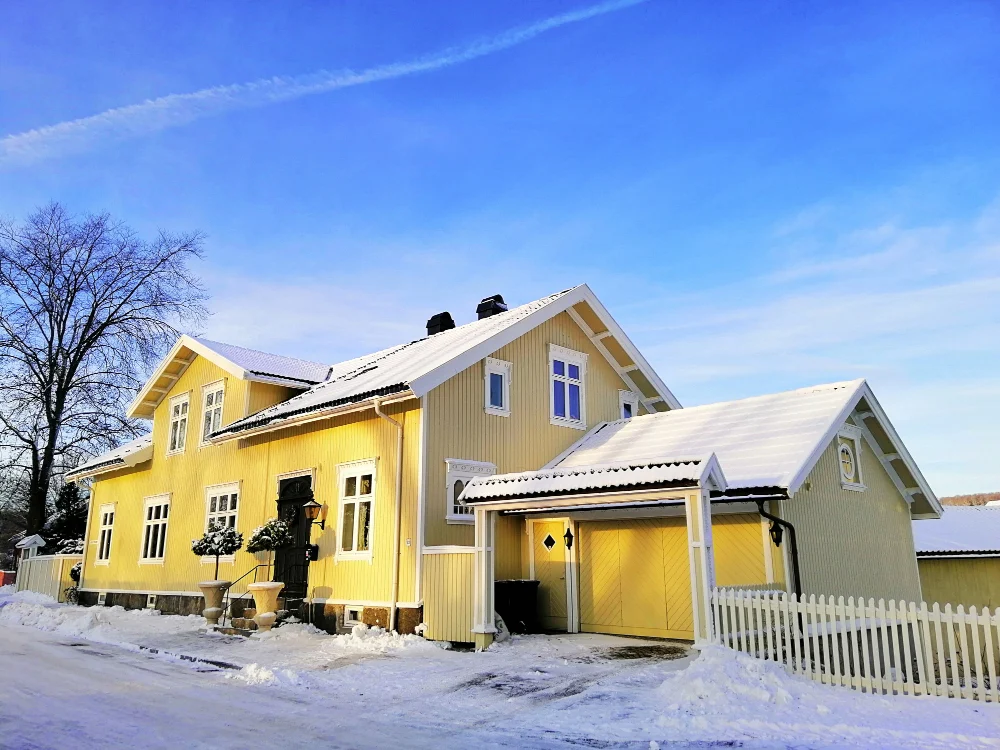
The Modern Farmhouse performs in nearly every market we serve — but it is especially at home on the larger, semi-rural lots of the Barrington area, Long Grove, Inverness, and the Fox Valley communities of St. Charles and Geneva, where the agrarian silhouette has genuine landscape to sit against.
On wooded or open-meadow lots, the steep gabled massing reads honestly; in established North Shore neighborhoods, a more restrained, painted-brick interpretation keeps the home in conversation with its neighbors.
Barrington
North Barrington
Long Grove
Inverness
Lake Forest
Highland Park
St. Charles
Geneva
Glenview
Northbrook
Building This Style with Forest Heart.
A Modern Farmhouse lives or dies on its millwork, and that is where Forest Heart Builders’ in-house millwork studio becomes the difference. The beamed great-room ceiling, the painted Shaker kitchen, the mudroom lockers, the window seats and the panelled hood are all built to the home rather than ordered to a catalog.
- Beamed ceilings and cabinetry designed to the home, not for a catalog
- Dedicated project team carries design intent from framing through finish
- Sympathetic site planning preserves mature canopy and landscape character
Frequently Asked.
What is the difference between Prairie Modern and the original Prairie School style?
The original Prairie School, associated with Frank Lloyd Wright and his contemporaries, is an early-twentieth-century movement. Prairie Modern keeps its core principles horizontality, deep overhangs, integration with the landscape, natural materials, a central hearth and pairs them with contemporary open planning, current glazing technology, and modern systems.
Why is Prairie Modern a fitting style for the Chicago area?
The Prairie School was born in and around Chicago, and its horizontal language was conceived in response to the flat Midwestern landscape. Building Prairie Modern here is building in a regionally rooted architectural tradition rather than importing a style from elsewhere.
Does Prairie Modern require a large lot?
It is most successful on a generous, ideally wooded or rolling lot, because the style depends on horizontal spread and on a real relationship to the landscape. It can be adapted to smaller sites, but the larger Northwest Suburban lots are where it performs best.
Is Prairie Modern warmer than other modern styles?
Generally, yes. Its reliance on natural stone, warm wood, and a central hearth gives it an earthbound warmth that distinguishes it from the cooler, more planar Contemporary Modern idiom.